
Identity Theft Awareness Week 2026: How Notarization Helps Keep Alaska Families Safe
- Danielle Montoya
- Jan 26
- 5 min read
January 26-30, 2026 marks Identity Theft Awareness Week, and if you've ever had your personal information compromised, or know someone who has, you understand just how devastating it can be. In 2024 alone, Americans reported losing a staggering $12.5 billion to scams, with over 2.6 million fraud reports filed. That's not just a statistic; those are real families dealing with real consequences.
Here in Alaska, where our communities are tight-knit but spread out across vast distances, protecting our identities takes on a unique importance. And here's something you might not have considered: notaries play a surprisingly big role in keeping you and your family safe from identity theft.
Let's talk about how.
What Exactly Is Identity Theft Awareness Week?
Identity Theft Awareness Week is an annual event organized by the Federal Trade Commission (FTC) and partners like the Better Business Bureau. During this week, experts host free webinars, podcasts, and events designed to help everyday folks like us learn how to prevent identity theft and recover if we ever become victims.
It's the perfect time to take stock of how we're protecting our personal information, and to learn about tools and resources we might not have thought about before.
The Unsung Heroes: How Notaries Help Prevent Identity Theft
When most people think about preventing identity theft, they think about strong passwords, credit freezes, and shredding sensitive documents. All great strategies! But there's another layer of protection that often flies under the radar: notarization.
So how exactly does getting a document notarized help protect you from identity theft? Let me break it down.
Identity Verification Is Our Number One Job
Before a notary can put their stamp on any document, they have to verify that you are who you say you are. This isn't just a casual glance at your face, it's a careful process.
When you sit down with me for a notarization, I'm going to ask for valid, government-issued identification. I check the photo, the expiration date, and the identifying information to make sure everything matches up. If something seems off, I can't proceed with the notarization.
This might seem like a minor inconvenience when you're in a hurry to sign paperwork, but think about it from a security standpoint. If someone tried to forge your signature on a property deed, a power of attorney, or a financial document, that identity verification step is a major roadblock for them. It's much harder for a criminal to impersonate you when a trained notary is looking them in the eye and checking their ID.
Witnessing Signatures Adds Another Layer of Protection
Beyond verifying your identity, notaries also serve as impartial witnesses to the signing of important documents. This creates an official record that you, the actual person named in the document, were present and signed willingly.
Why does this matter? Because if someone ever disputes a signature or claims fraud, that notarization serves as evidence. It's documentation that a neutral third party confirmed everything was legitimate at the time of signing.
For documents like real estate transactions, loan agreements, powers of attorney, and estate planning paperwork, this witness function is invaluable.
Creating a Paper Trail That Protects You
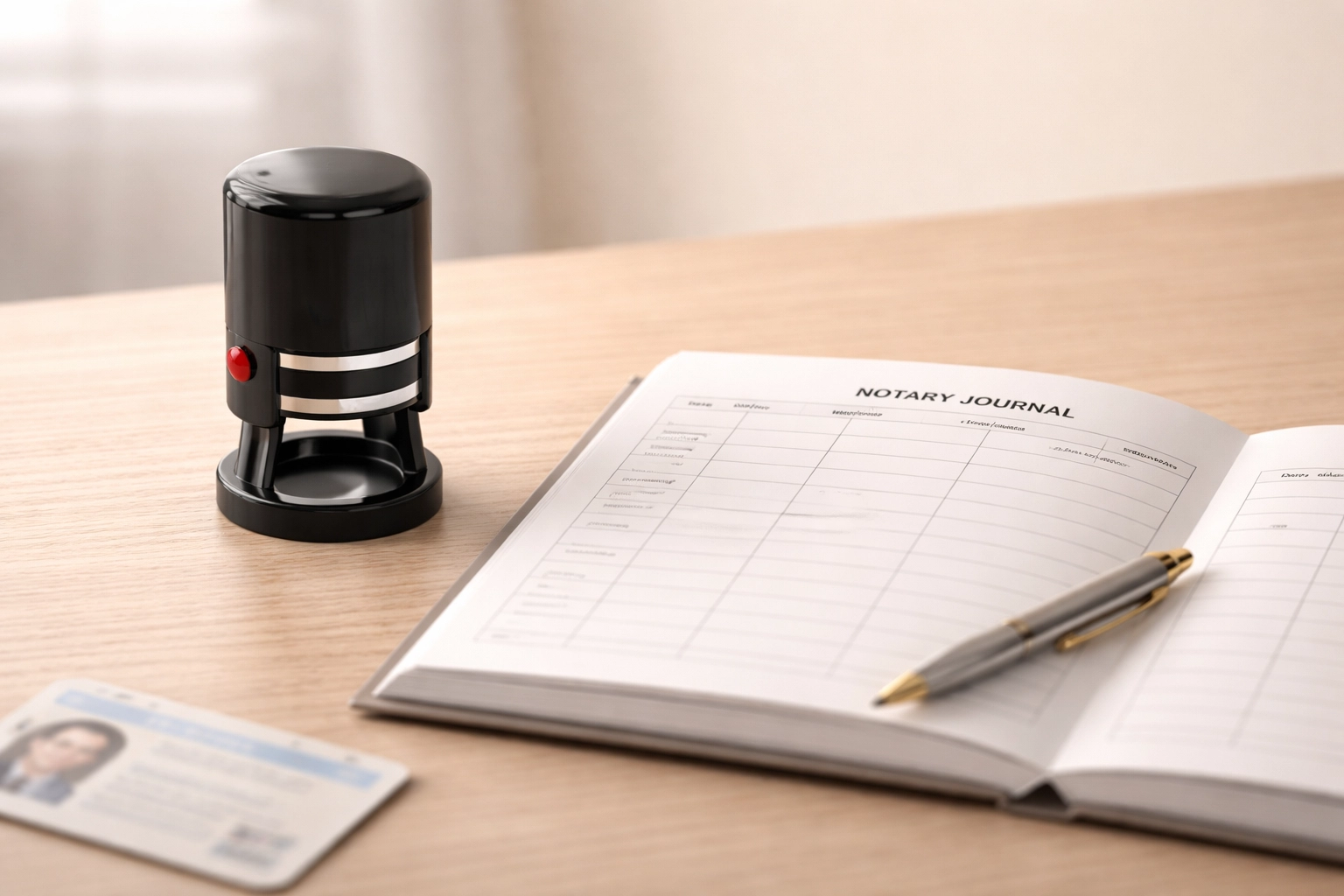
Every notarization I perform gets recorded in my official notary journal. This journal includes details like:
The date and time of the notarization
The type of document being notarized
The name of the signer
The type of identification used
The signer's signature
This paper trail exists specifically to protect you. If there's ever a question about a document's authenticity down the road, that journal entry provides proof of what happened and when.
Why This Matters for Alaska Families
Living in Interior Alaska comes with its own set of challenges. We're used to driving long distances for basic services, dealing with unpredictable weather, and sometimes feeling a little isolated from the resources available in bigger cities.
Unfortunately, these same factors can make us more vulnerable to certain types of fraud. When you're mailing important documents because the nearest office is hours away, or when you're handling sensitive paperwork without easy access to professional services, there's more opportunity for things to go wrong.
That's where having a trusted, local mobile notary makes a difference.
Serving Delta Junction, Fort Greely, and Beyond
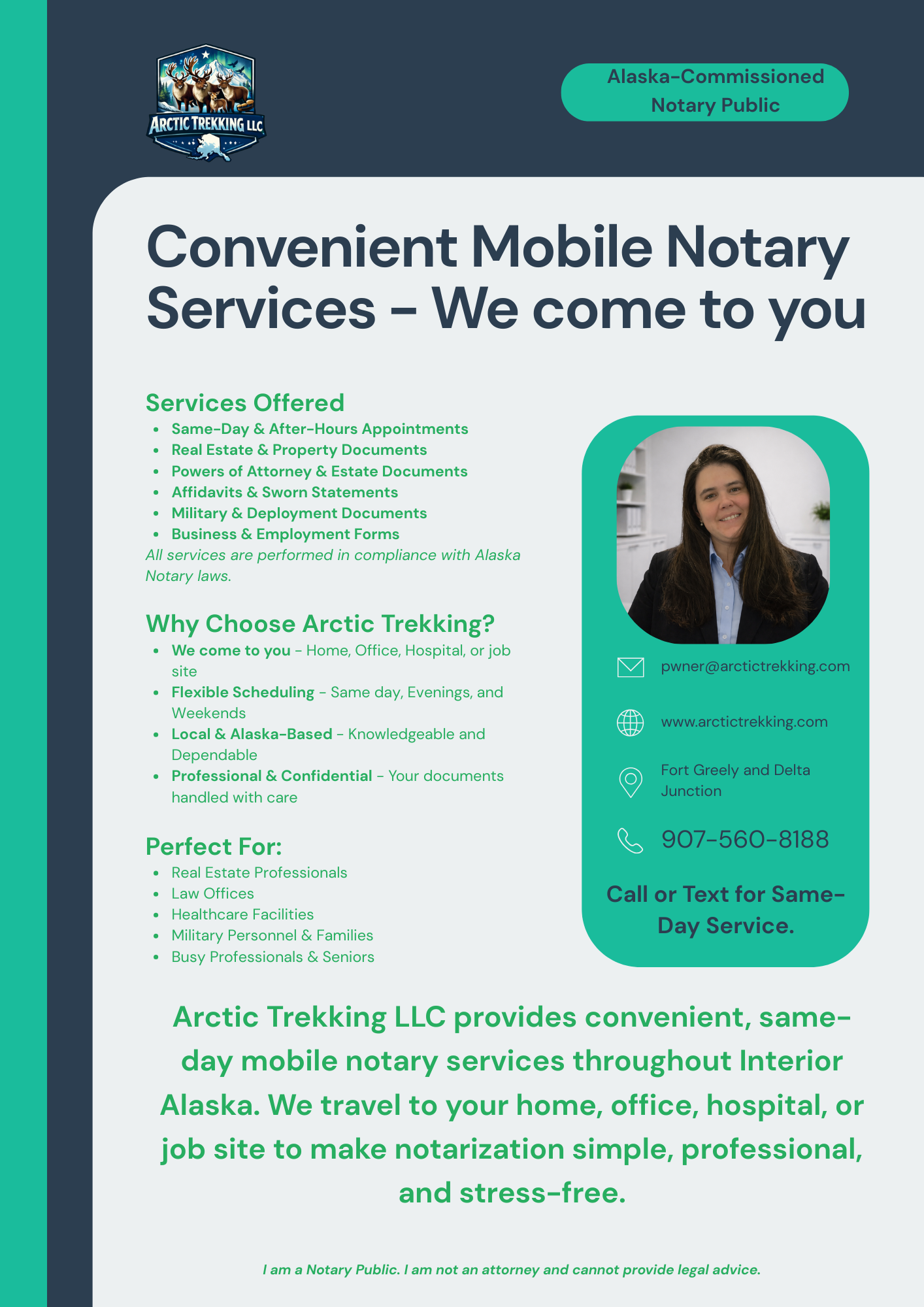
I'm Danielle with Arctic Trekking, LLC, and I provide mobile notary services right here in our community. I serve Delta Junction, Fort Greely, and the surrounding areas, which means I come to you.
Whether you're at home, at work, or somewhere in between, I'll meet you where it's convenient. No driving to Fairbanks, no waiting in line, no rearranging your whole day. Just professional, secure notary services that fit your schedule.
And for our military families at Fort Greely? I have base access, which not all mobile notaries can say. That means I can meet you right on post, no need to coordinate gate access or drive off base.
Simple Steps to Protect Yourself This Identity Theft Awareness Week
While notarization is a powerful tool for protecting important documents, it's just one piece of the puzzle. Here are some other steps you can take during Identity Theft Awareness Week (and year-round) to keep your information safe:
Monitor your accounts regularly. Set up alerts for your bank accounts and credit cards so you're notified of any unusual activity right away.
Use strong, unique passwords. I know it's tempting to use the same password everywhere, but mixing it up makes it much harder for criminals to access multiple accounts if one gets compromised.
Enable multi-factor authentication. That extra step of entering a code sent to your phone might seem annoying, but it's one of the best ways to keep hackers out.
Freeze your credit. If you're not actively applying for new credit, consider freezing your credit reports with all three bureaus. It's free and prevents anyone from opening new accounts in your name.
Be cautious with your personal information. Whether it's a phone call, email, or even someone in person, think twice before sharing sensitive details like your Social Security number or financial information.
Credit freeze links (all 3 bureaus):Equifax | Experian | TransUnion
Get important documents notarized. For anything involving property, finances, legal matters, or healthcare decisions, that extra layer of verification can save you major headaches down the road.
When Should You Get a Document Notarized?
Not sure if your document needs notarization? Here are some common situations where it's either required or highly recommended:
Real estate transactions (deeds, mortgages, closing documents)
Powers of attorney
Wills and estate planning documents
Loan documents
Vehicle title transfers
Affidavits and sworn statements
Medical directives and healthcare proxies
Military paperwork (deployment documents, family care plans)
When in doubt, it's better to have a document notarized than to wish you had later. The small investment of time and money now can prevent significant problems in the future.
Let's Keep Our Community Safe Together
Identity theft isn't just a big-city problem, it can happen to anyone, anywhere. But by being proactive and using the tools available to us, we can make it a lot harder for criminals to succeed.
This Identity Theft Awareness Week, I encourage you to take a few minutes to review your security practices and think about how notarization fits into your overall protection plan. And if you have documents that need notarizing, I'm here to help.
Reach out to Arctic Trekking, LLC to schedule an appointment. I'll come to you, verify your identity, witness your signature, and help ensure your important documents are secure and legitimate.
Stay safe out there, Alaska!
Disclaimer: Arctic Trekking, LLC is a notary public service and does not provide legal advice. I am not an attorney licensed to practice law and may not give legal advice or accept fees for legal advice. If you have legal questions, please consult with an attorney.
Comments