
Remote Online Notary vs. Mobile Notary: Which Is Better For Your Alaska Document?
- Danielle Montoya
- Feb 4
- 6 min read
So you need to get a document notarized in Alaska, and you're staring at two options: Remote Online Notary (RON) or a good old-fashioned mobile notary who'll drive to meet you. Both get the job done, but which one is right for your situation?
Let's break it down without the legal jargon. By the end of this post, you'll know exactly which option makes the most sense for your documents, your schedule, and your budget.
What's the Difference, Anyway?
Here's the quick version:
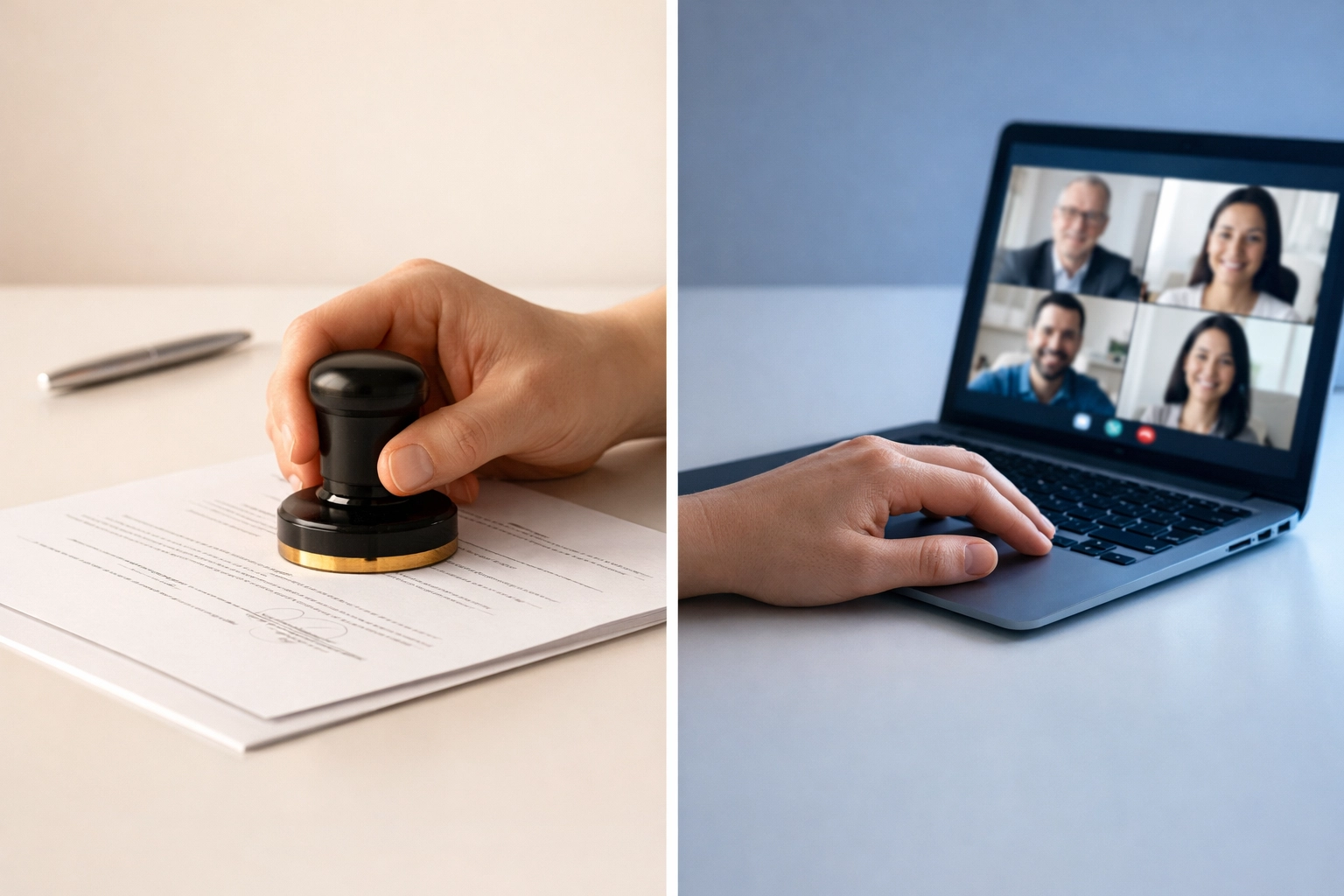
Mobile notaries are real, live notary publics who pack up their stamp and journal and come to wherever you are, your home, office, hospital room, coffee shop, you name it. They notarize your documents in person, just like notaries have been doing for centuries.
Remote Online Notaries (RON) do the same thing, but through your computer or phone screen. You hop on a secure video call, show your ID to the camera, and sign your document electronically. No one travels anywhere. No one even needs to put on real pants.
Alaska made RON permanently legal for electronic documents starting January 1, 2021, so both options are 100% legit in our state.
How Mobile Notary Works in Alaska
When you book a mobile notary, here's what typically happens:
You schedule an appointment (usually with at least a few hours' notice, though same-day service is often available)
The notary drives to your location, whether that's Delta Junction, Fort Greely, Fairbanks, or anywhere in the Interior Alaska region
You meet face-to-face, present your ID, and sign your documents in front of them
The notary stamps, signs, and records the notarization in their journal
You get your notarized document right then and there
Mobile notaries are perfect when you've got physical documents, like original powers of attorney, real estate deeds, or military deployment papers, that need an ink signature and an official stamp.
The trade-off? You're paying for convenience. Mobile notaries charge travel fees on top of the base notarization fee, especially if you're in a more remote area. But if you can't leave home (maybe you're recovering from surgery, caring for kids, or just don't have reliable transportation), it's worth every penny.
How Remote Online Notary Works
RON is the digital-first option. Here's the flow:
You upload your electronic document to a RON platform
You join a live video session with a commissioned remote online notary
The notary verifies your identity using knowledge-based authentication (think security questions) and by examining your ID on camera
You sign the document electronically using an e-signature
The notary applies their electronic seal and signature
You download your notarized document immediately
The whole thing can happen in 15-20 minutes, sometimes even faster. No waiting for someone to drive across town. No printing. No scanning.

The Big Comparison: What Matters Most to You?
Let's get into the nitty-gritty. Here's how mobile notary and RON stack up across the factors that actually matter:
Speed
RON wins this round. Many RON platforms offer near-instant availability. You can log on at 9 PM on a Tuesday and find a notary ready to go. No appointment needed.
Mobile notaries usually require scheduling in advance, even same-day appointments mean you're coordinating calendars and waiting for drive time. If you're in a rural area of Alaska, that drive time can add hours to your timeline.
Cost
RON is typically cheaper. You're paying for the notarization itself, but there's no travel fee. Some RON services charge a flat rate regardless of where you're located.
Mobile notaries charge travel fees based on distance and time. If you're 45 minutes outside of Fairbanks, expect to pay more than someone in the city center. That said, the base notarization fee is often similar between the two.
Convenience
This one's a tie, honestly, it depends on your version of convenience.
RON is convenient if: You have reliable internet, you're comfortable with technology, and you prefer not having a stranger come to your home or office.
Mobile notary is convenient if: You don't have great internet, you're not tech-savvy, or you genuinely prefer face-to-face interactions. Plus, mobile notaries can meet you literally anywhere, a hospital, a job site, even a parking lot if needed.

Security and Identity Verification
Both options are secure, just in different ways.
Mobile notaries verify your identity in person by examining your physical ID. They rely on their training and judgment to spot fake IDs or fraudulent behavior.
RON platforms use automated identity verification technology, scanning your ID, checking it against government databases, and sometimes using knowledge-based authentication (questions only you would know). Everything is encrypted and recorded.
Neither method is foolproof, but both are considered legally sound in Alaska.
Document Types
Here's where things get important: Alaska only authorizes RON for electronic documents.
If you have a physical document that must remain in paper form (like certain original estate planning documents or court filings), you need a mobile notary. Period.
If your document was born digital, an e-contract, a digital power of attorney form, or a PDF loan document, RON works great.
Some mobile notaries can also handle electronic notarizations in person, giving you the best of both worlds. That's worth asking about when you book.
When to Choose Mobile Notary
Go with a mobile notary if:
Your document must be notarized in its physical form. Some legal documents still require wet signatures and physical stamps.
You're not comfortable with video calls or e-signatures. Not everyone wants to deal with the tech, and that's totally okay.
You need multiple documents notarized at once. It's often easier to spread a stack of papers on a table and work through them in person.
You value the face-to-face interaction. Some people just prefer meeting their notary in person, especially for important life documents.
You're in a location with unreliable internet. Alaska's internet infrastructure can be spotty, especially in rural areas. If your connection drops mid-session, RON becomes a headache.

When to Choose Remote Online Notary
Go with RON if:
You're working with electronic documents. PDFs, digital contracts, and electronically generated forms are perfect for RON.
You need it done fast. No scheduling, no waiting, no travel time. Just log on and get it done.
You want to save money. No travel fees means lower total cost, especially if you're far from a notary's home base.
You're out of state (or even out of the country). RON lets you work with an Alaska-commissioned notary even if you're currently in Texas, Germany, or anywhere else with internet.
You have mobility challenges. If leaving home is difficult, RON eliminates the need entirely.
What Works Best in Alaska?
Alaska's a big state with unique challenges. Here's the honest truth:
If you live in Fairbanks, Anchorage, or another urban area with solid infrastructure, both options work great. You've got reliable internet for RON and plenty of mobile notaries who won't charge an arm and a leg for travel.
If you're in the Interior, rural areas, or military installations like Fort Greely, it gets trickier. Mobile notaries might charge higher travel fees, and your internet might not be stable enough for a smooth RON experience. In those cases, ask yourself: is my document required to be physical, or can it be electronic? That usually settles the debate.
For military families and active-duty personnel, both options have pros. RON is great when you're juggling a packed schedule or deploying soon. Mobile notaries are better when you need someone who understands military paperwork inside and out and can meet you on base.
The Bottom Line
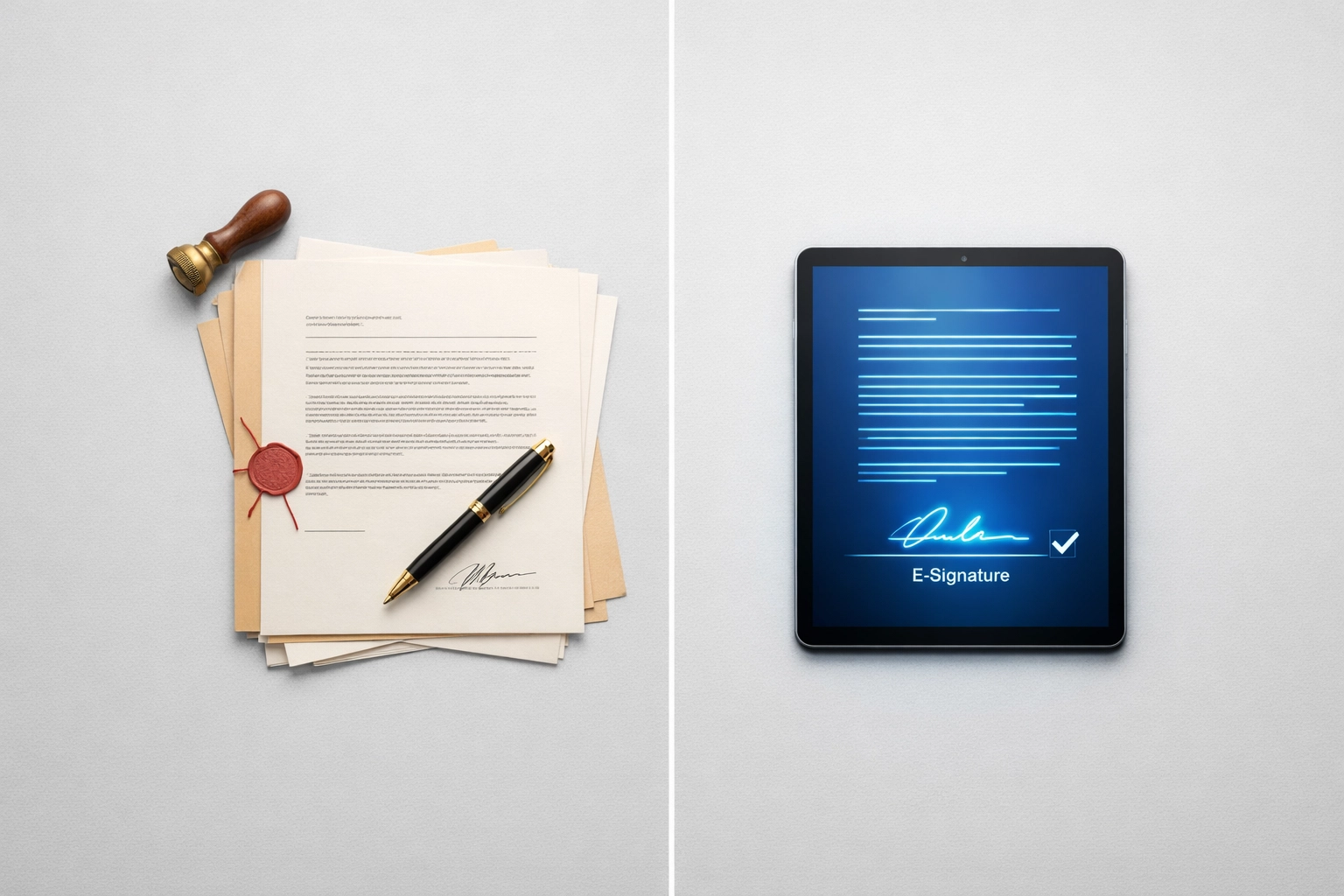
Neither option is universally "better", it depends on your specific situation.
Choose Remote Online Notary if: You're working with electronic documents, need speed, want to save money, and have reliable internet.
Choose mobile notary if: You have physical documents, prefer in-person service, need help with complex paperwork, or your internet isn't dependable.
And hey, if you're still not sure? Just ask. Reach out to a notary service and explain what you're trying to get notarized. A good notary will steer you in the right direction, even if it means recommending RON instead of a mobile appointment.
At the end of the day, both options exist to make your life easier. Pick the one that fits your documents, your budget, and your comfort level, and you'll be just fine.
Disclaimer: I am not an attorney licensed to practice law and may not give legal advice or accept fees for legal advice. This blog post is for informational purposes only and does not constitute legal counsel. For specific legal questions about your documents or notarization requirements, please consult with a licensed attorney in Alaska.
Comments