
Remote Online Notarization in Alaska: 5 Things You Should Know Before Your First RON Session
You know that feeling when you need to get a document notarized, but it's 20 below zero outside and your driveway is buried under three feet of snow? Or maybe you're stationed at Fort Greely, and the nearest notary office closes before you even get off shift? Yeah, Alaska has some unique challenges when it comes to getting paperwork done.
That's exactly why Remote Online Notarization (RON) became such a game-changer for folks living in the Last Frontier.
How RON Came to Alaska
Before January 1, 2021, if you needed a notary, you had to physically meet with one, no exceptions. For most Alaskans, that meant driving (sometimes hours), battling winter weather, or waiting weeks for a mobile notary to make it out to remote areas.
Then House Bill 124 changed everything. Signed into law and effective on New Year's Day 2021, this legislation made Remote Online Notarization a permanent part of Alaska's notary landscape. Not a temporary COVID measure, permanent. That's a big deal.
Why Alaska Needed RON in the First Place
Let's be real: Alaska isn't exactly like the Lower 48. We're talking about a state where some communities are only accessible by plane or boat. Where "running into town" might mean a 200-mile round trip. Where winter darkness and extreme weather can make even basic errands feel like Arctic expeditions.
Here's what was happening before RON:
Geographic Isolation: In villages across rural Alaska, finding a notary meant waiting for one to fly in (expensive) or traveling to Anchorage or Fairbanks (time-consuming and also expensive).
Commercial Transaction Delays: Real estate closings, business deals, and estate planning all ground to a halt when documents couldn't get notarized quickly. Time zones and weather made scheduling in-person meetings nearly impossible for many Alaskans.
COVID-19 Urgency: When the pandemic hit, in-person notarizations became not just inconvenient but potentially unsafe. The push for a remote solution became critical.
Military Family Complications: With multiple military installations across Alaska, service members and their families needed a way to handle urgent legal documents, especially during deployments or PCS moves.
Alaska's legislature recognized that our state's unique geography demanded a modern solution. RON wasn't just convenient; it was necessary.
Why RON Works So Well for Alaskans
Remote Online Notarization feels like it was designed specifically for Alaska life. Here's why it clicks:
Remoteness Is No Longer a Barrier: Whether you're in Barrow or Bethel, all you need is internet access. No more chartering planes or driving through blizzards.
Extreme Weather Doesn't Win: When it's -40°F and the roads are closed, you can still get your power of attorney notarized from your warm living room.
Military Families Get Flexibility: If you're active duty and need documents notarized at 10 PM because that's when you finally have time, RON makes it possible. No more rushing before an office closes or scrambling during PCS season.
Time Zone Troubles? Solved: Alaska's time zone can make scheduling tough with folks in other states. RON lets you connect with notaries who work hours that fit your schedule.
It's the kind of innovation that actually improves daily life for real Alaskans.
The 5 Things You Need to Know Before Your First RON Session
Alright, so you're ready to try Remote Online Notarization. Here's what you should know before you hop on that video call:
1. You Need More Than Just Your Regular ID
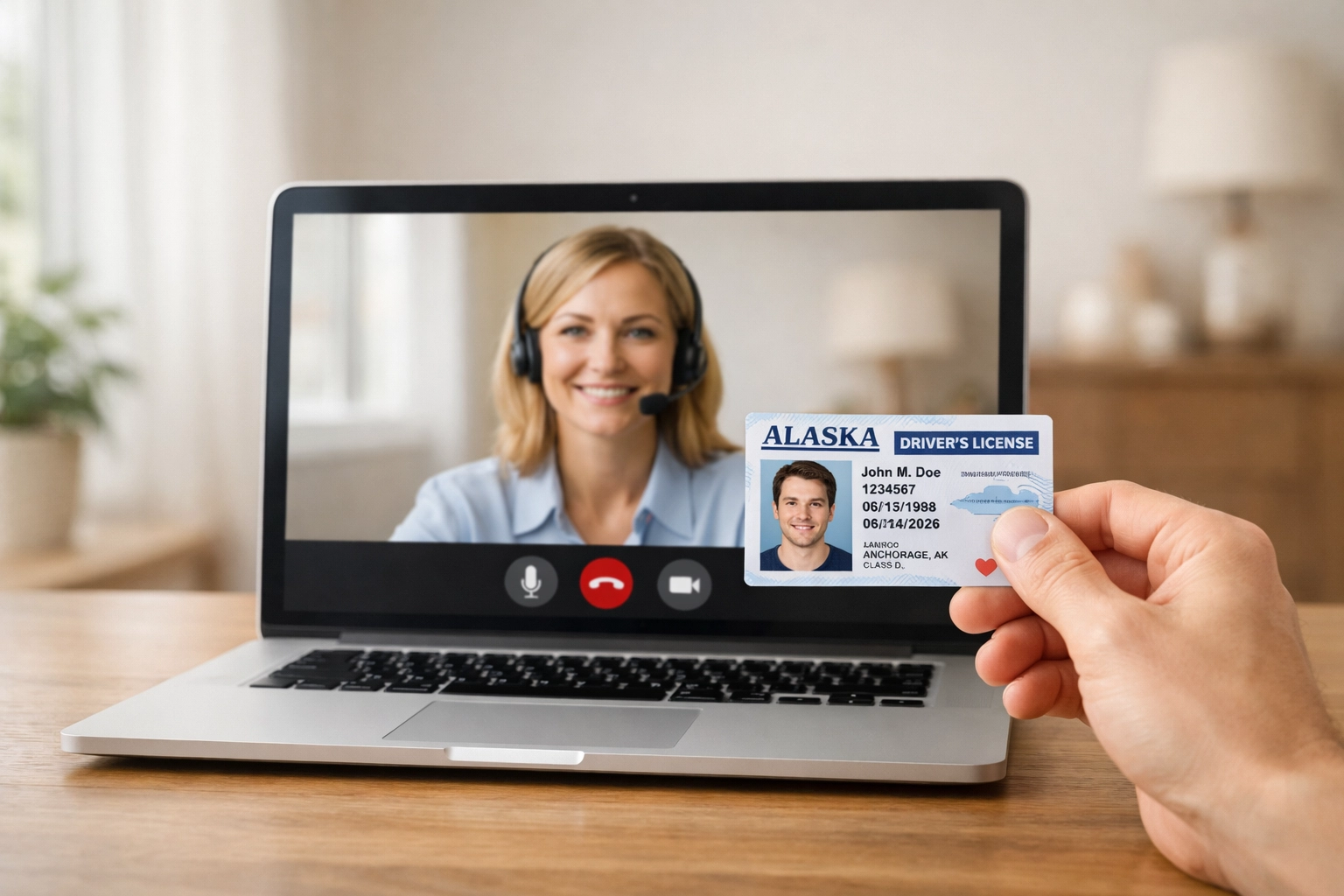
Here's something that trips people up: you can't just show up with any ID. The notary will need to verify your identity through credential analysis (basically, they'll analyze your government-issued ID using special technology) and usually knowledge-based authentication (you'll answer questions about your personal history that only you would know).
Make sure you have a valid government-issued photo ID ready. Driver's licenses work great. Passports are perfect. State IDs are good to go.
Important note: If you're planning to use a Military ID, please be aware that Military IDs cannot be copied by law. Your notary will verify it visually during the session but cannot make copies or store images of it. Have a backup form of ID ready just in case, like a driver's license or passport.
2. Your Notary Must Be in Alaska (Even If You're Not)
This is a common question: "Can I use any notary from anywhere?"
Here's the deal: the notary must be physically located in Alaska during the notarization session. That's Alaska law. However, YOU can be anywhere, Florida, Germany, on a cruise ship in the Caribbean. As long as your notary is sitting in Alaska and you have reliable internet, you're good.
3. The Technology Has to Meet State Standards
Not every video chat platform will work for RON. Alaska requires platforms that provide:
Real-time audio and video with clear resolution
Identity verification tools built into the platform
Electronic signature capabilities with tamper-evident seals
Secure recording of the entire session
Your notary will handle all the tech setup on their end. You just need a device with a camera, microphone, and stable internet connection. Most people use laptops or tablets, phones can work but sometimes the screen size makes reviewing documents tricky.
4. Everything Gets Recorded and Stored
This is actually a good thing. Every RON session is recorded (audio and video) and stored securely. The notary keeps a detailed journal entry and maintains these records for 10 years.
Why does this matter? It protects both you and the notary. If there's ever a question about whether a document was properly notarized, there's a complete record to review. It's way more secure than traditional notarizations where you just get a stamp and a signature.
Don't worry about privacy, these recordings are confidential and only accessible if there's a legal dispute or investigation.
5. RON Costs a Bit More (But It's Worth It)
Remote Online Notarization typically costs more than traditional in-person notarization. Why? Because the notary pays for the specialized platform, the technology certification, and the additional training required.
In Alaska, notaries pay a $100 fee just for the 4-year RON authorization, that's on top of their regular notary commission fees. They also pay monthly or per-transaction fees to their RON platform provider.
Most notaries charge between $25-$50 per RON notarization (compared to $10-$15 for in-person). But when you factor in the convenience, the gas money you save, and the time you get back? For most Alaskans, it's absolutely worth it.
Ready to Try RON?
Remote Online Notarization has genuinely transformed how Alaskans handle important documents. Whether you're closing on a cabin in Talkeetna, setting up a power of attorney before deployment, or finalizing estate documents from your home in Juneau, RON makes it happen without the hassle.
If you're in Interior Alaska and need mobile or remote notary services, Arctic Trekking, LLC serves Fort Greely, Delta Junction, and surrounding communities. We offer both traditional mobile notary visits and Remote Online Notarization to fit whatever works best for your situation.
Disclaimer: I am not an attorney licensed to practice law and may not give legal advice or accept fees for legal advice. Arctic Trekking, LLC does not provide legal advice. For legal questions, please consult a licensed attorney.
Powered by Marblism
Comments