
Notary 101: Acknowledgements vs. Jurats, What's the Difference?
- Danielle Montoya
- Feb 18
- 5 min read
So you've got a document that needs to be notarized. You scheduled your appointment, you're ready to go, and then someone asks: "Do you need an acknowledgement or a jurat?"
Wait, what?
If you've never heard these terms before, don't worry, you're definitely not alone. Most people just know they need "a notary" without realizing there are actually different types of notarial acts. And honestly? That's totally fine. You don't need to become an expert in notary law to get your documents handled properly.
But a little knowledge goes a long way! Understanding the basics can help you show up prepared and make your appointment go smoothly. So let's break down these two common notarial acts in plain English.
What Is an Acknowledgement?
An acknowledgement is probably the most common type of notarization you'll encounter. When you get a document acknowledged, you're basically telling the notary three things:
Yes, this is really me. You're confirming your identity.
Yes, I signed this document. You're acknowledging that the signature on the document is yours.
Yes, I signed it willingly. No one forced you or tricked you into signing.
That's it! You're not swearing that everything written in the document is 100% true. You're simply confirming that you are who you say you are and that you intentionally signed the document.
When Are Acknowledgements Used?
You'll typically see acknowledgements required for documents like:
Real estate deeds and property transfers
Mortgage documents
Powers of attorney
Trust documents
Many contracts and agreements
Here's something that surprises a lot of people: you can actually sign an acknowledged document before your notary appointment. As long as you're willing to confirm to the notary that the signature is yours and you signed voluntarily, the notary doesn't necessarily need to watch you put pen to paper.
That said, many people prefer to sign in front of the notary anyway, and that's perfectly fine too!

What Is a Jurat?
A jurat is a bit more serious. When you get a jurat, you're not just confirming your identity and signature, you're also taking an oath or affirmation that the contents of the document are true and correct.
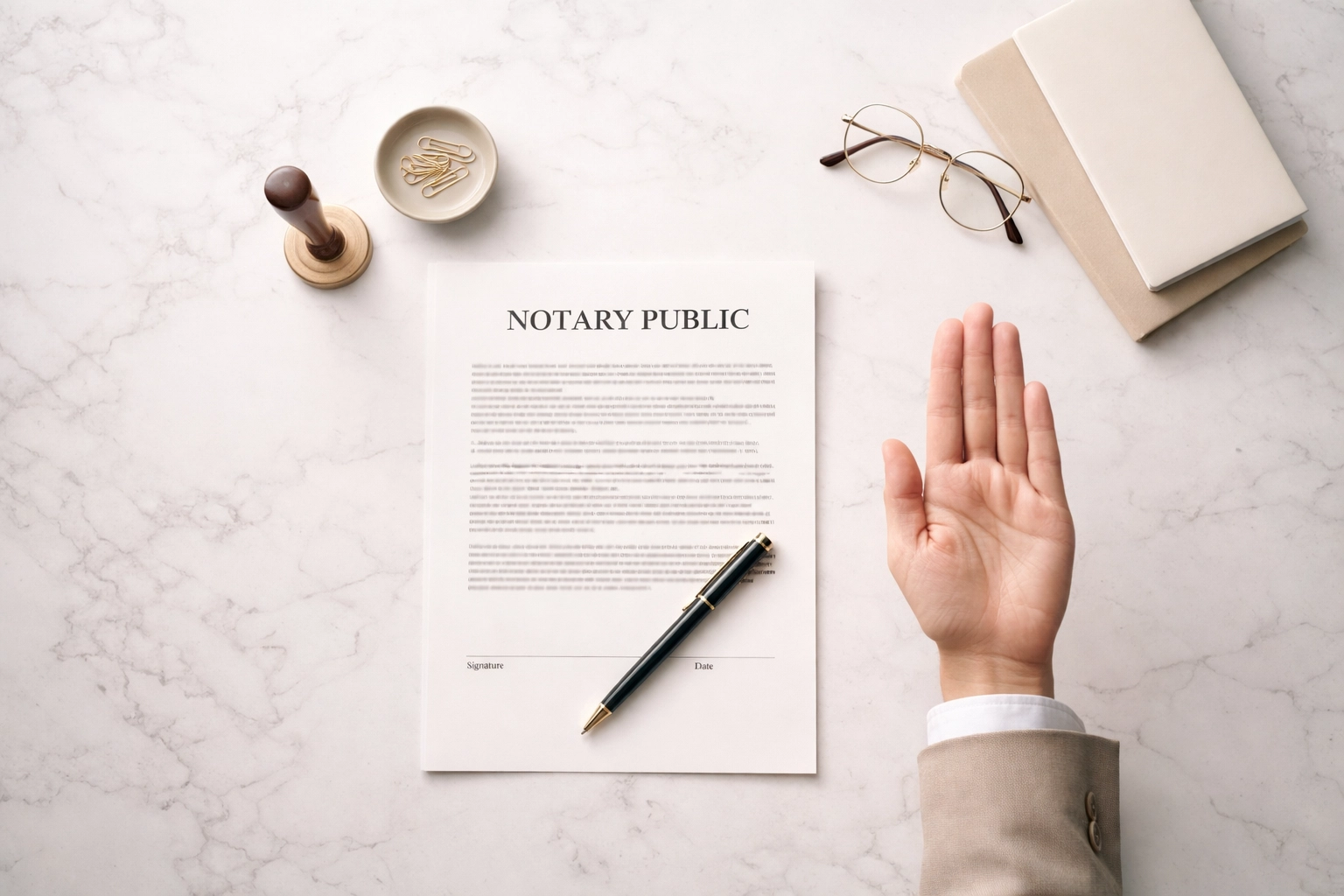
Think of it like this: you're raising your right hand (figuratively or literally) and swearing that you're telling the truth. This is why jurats are often used for documents where truthfulness really matters.
The Key Components of a Jurat
For a jurat, the notary will:
Verify your identity (just like with an acknowledgement)
Watch you sign the document , this is required!
Administer an oath or affirmation where you swear or affirm that the information in the document is true
That oath part is the big difference. The notary will actually ask you something like, "Do you solemnly swear (or affirm) that the statements in this document are true and correct to the best of your knowledge?"
And here's the important part: when you say "yes," you're making that statement under penalty of perjury. That means if you knowingly lie in a sworn document, there can be legal consequences.
When Are Jurats Used?
Jurats are commonly required for:
Affidavits
Depositions
Court documents and legal pleadings
Sworn statements
Some financial documents
Immigration paperwork
Because of the oath requirement, you must sign a jurat document in front of the notary. You can't sign it ahead of time and bring it to your appointment already completed. The notary needs to witness your signature personally.
The Key Differences at a Glance
Let's make this super easy with a quick comparison:
Acknowledgement | Jurat | |
What you're confirming | Your identity and that you signed willingly | Your identity AND that the document contents are true |
Oath required? | No | Yes |
Must sign in front of notary? | Not always | Yes, always |
Common documents | Deeds, powers of attorney, contracts | Affidavits, court documents, sworn statements |
Certificate language | "acknowledged before me" | "subscribed and sworn to before me" |
Here's the Thing: Your Notary Can't Choose for You
This is really important, so I want to make sure it's crystal clear: your notary cannot tell you which type of notarization you need.
I know, I know, it would be so much easier if you could just hand over your document and have the notary figure it out. But here's why that doesn't work:
Choosing the wrong notarial act could invalidate your document. It could cause legal problems down the road. And frankly, making that decision for you would be stepping into legal advice territory, which notaries are not authorized to do.
So who does decide? Usually, one of these sources:
The document itself. Many documents include notarial certificate language that specifies exactly what's needed. Look for phrases like "acknowledged before me" (that's an acknowledgement) or "subscribed and sworn to before me" (that's a jurat).
The receiving party. Whoever is requiring the notarized document, whether it's a court, a bank, a government agency, or another organization, typically specifies what they need.
An attorney. If you're working with a lawyer on legal documents, they'll tell you what type of notarization is required.
If you're not sure what you need, the best approach is to contact whoever is requesting the document and ask them directly. They deal with this stuff all the time and can point you in the right direction.
Tips for a Smooth Notary Appointment
Now that you understand the difference between acknowledgements and jurats, here are a few tips to make your appointment go as smoothly as possible:
1. Don't sign jurat documents ahead of time. If your document requires a jurat, leave it unsigned! Bring it blank and sign it in front of your notary. If you've already signed a jurat document, the notary may not be able to notarize it.
2. Bring valid identification. This applies to both types of notarization. Your notary needs to verify your identity, so bring a current, government-issued photo ID like a driver's license, state ID, passport, or military ID.
3. Know what you need before your appointment. Check your document for notarial certificate language, or contact the requesting party to confirm. This saves time and prevents any surprises.
4. Bring all your documents. If you have multiple documents that need notarization, bring them all. And make sure none of the pages are missing!
5. Ask questions. A good notary will be happy to explain the process and make sure you understand what you're signing. Don't be afraid to speak up if something is confusing.
The Bottom Line
Acknowledgements and jurats are both important notarial acts, but they serve different purposes. An acknowledgement confirms your identity and that you willingly signed a document. A jurat goes a step further by having you swear under oath that the document's contents are true.
Neither one is "better" than the other, it just depends on what your specific document requires. And remember, your notary is there to properly perform the notarization, but the decision about which type you need comes from the document itself, the requesting party, or your attorney.
Got a document that needs notarizing in Interior Alaska? Whether you need an acknowledgement, a jurat, or you're still not quite sure, we're here to help make the process easy. Contact Arctic Trekking, LLC to schedule your appointment, we offer flexible scheduling, including after-hours and same-day appointments when available.
Disclaimer: I am not an attorney licensed to practice law and may not give legal advice or accept fees for legal advice. The information provided in this blog post is for general educational purposes only and should not be considered legal advice. If you have questions about which type of notarization your document requires, please consult with an attorney or contact the party requesting your notarized document. Military IDs cannot be copied by law.
Comments