
From Clay Tablets to Smartphones (Part 1): The Ancient Origins of the Notary
- Danielle Montoya
- Feb 9
- 5 min read
Welcome to Part 1 of our 3-part series exploring the fascinating journey of notaries through history!
Ever wonder how old the notary profession actually is? Spoiler alert: it's really old. Like, "before the pyramids were built" old. While I'm sitting here in Alaska helping folks notarize their PCS orders and power of attorney documents on my smartphone, people were doing essentially the same job over 5,000 years ago, just with way different technology.
Let's take a trip back in time to see where it all began.
The Original Notaries: Mesopotamian Scribes and Their Clay Tablets
Around 3000 BC, in the fertile lands between the Tigris and Euphrates rivers (modern-day Iraq), the Sumerians were building one of the world's first great civilizations. And with civilization came paperwork. Well, not paper work exactly, more like clay work.
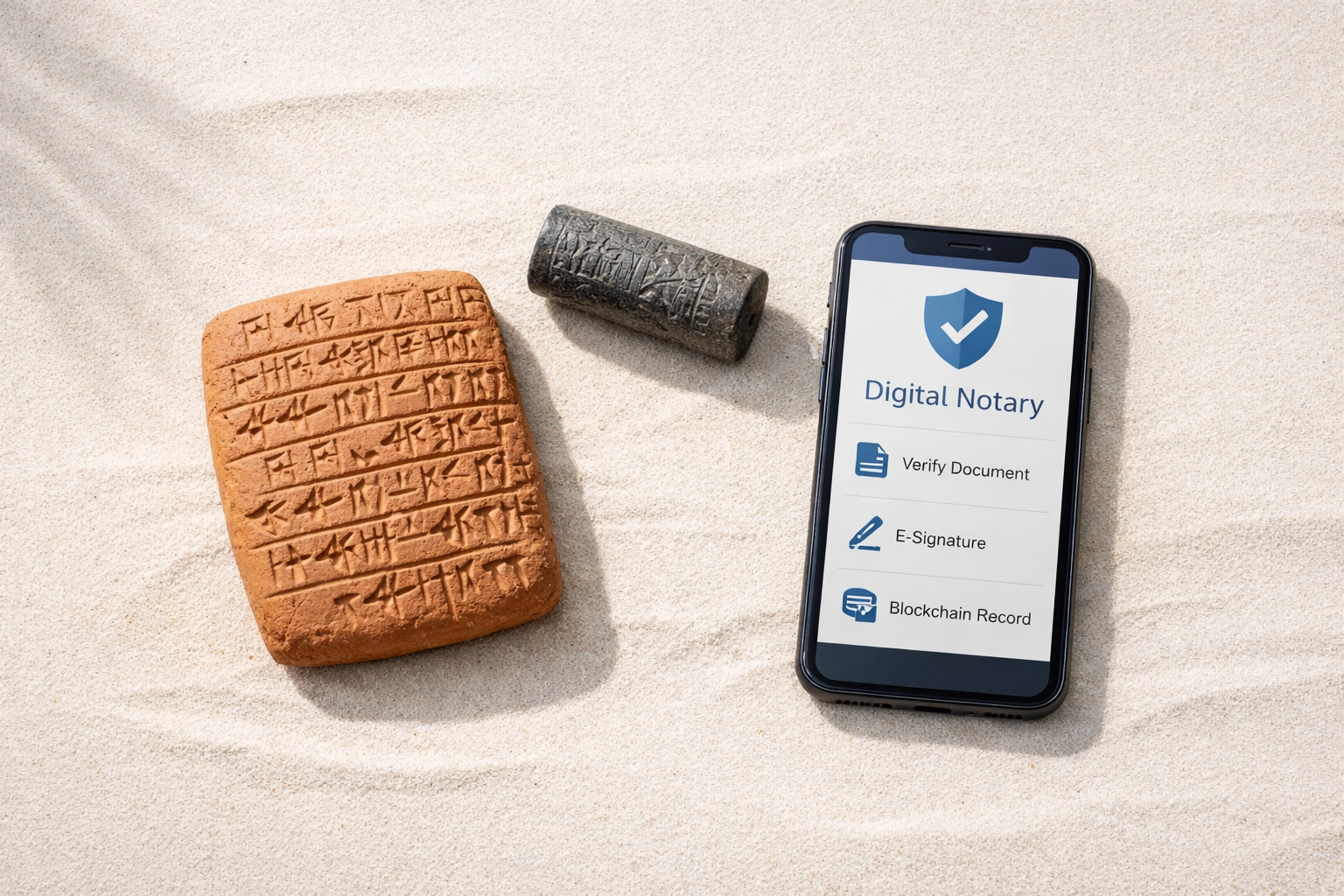
The region was booming. Trade was flourishing, property was changing hands, and temple officials needed a reliable way to keep track of it all. Enter the dub-sar, literally "tablet writers", the world's first notaries.
These scribes weren't just random folks who happened to know how to write. They were well-respected officials, often stationed at temples, public marketplaces, and city gates. Sound familiar? It's basically the ancient version of a mobile notary meeting you at convenient locations!
What Did These Ancient Notaries Actually Do?
The job description of a Mesopotamian scribe would look surprisingly similar to what we do today:
Document important transactions (think property sales, marriage contracts, business deals)
Provide writing and translation services (literacy wasn't exactly widespread)
Authenticate records with official seals
Maintain neutrality and serve as trusted witnesses
The big difference? Instead of meeting you at a coffee shop with my notary seal and journal, they'd meet you at the city gate with their reed stylus and wet clay.
The Technology: Clay Tablets and Cylinder Seals
Here's where it gets really cool. The Sumerians and later the Akkadians developed an entire system for creating permanent, authenticated records.
They used what was readily available: clay from the rivers. A scribe would take damp clay, flatten it into a tablet, and use a wedge-shaped reed stylus to press characters into the surface. This created cuneiform writing, one of the earliest writing systems in human history.
But here's the notary part: to authenticate these documents, they used cylinder seals. These were small stone cylinders engraved with text and images. When rolled across wet clay, they'd leave an impression, kind of like a signature and official seal combined. Each seal was unique to the person or office using it, making forgery extremely difficult.
Think of it as the ancient version of my embosser and signature combo. Same concept, just carved in stone instead of rubber!
These clay tablets were then dried in the sun or baked in kilns for permanent preservation. And boy, did that work, archaeologists are still finding and reading these tablets thousands of years later. (I wonder if my digital notary journal will last that long?)
Royal Appointment: Even Then, It Was Official
Here's something that really connects ancient notaries to modern ones: notaries were appointed by royal decree. You couldn't just decide to be a scribe one day. You needed official authorization from the powers that be.
Sound familiar? In Alaska, I had to be commissioned by the State to become a notary public. The Sumerians had the same idea 5,000 years ago. Some things never change!
Egypt: Another Cradle of Notarial Practice
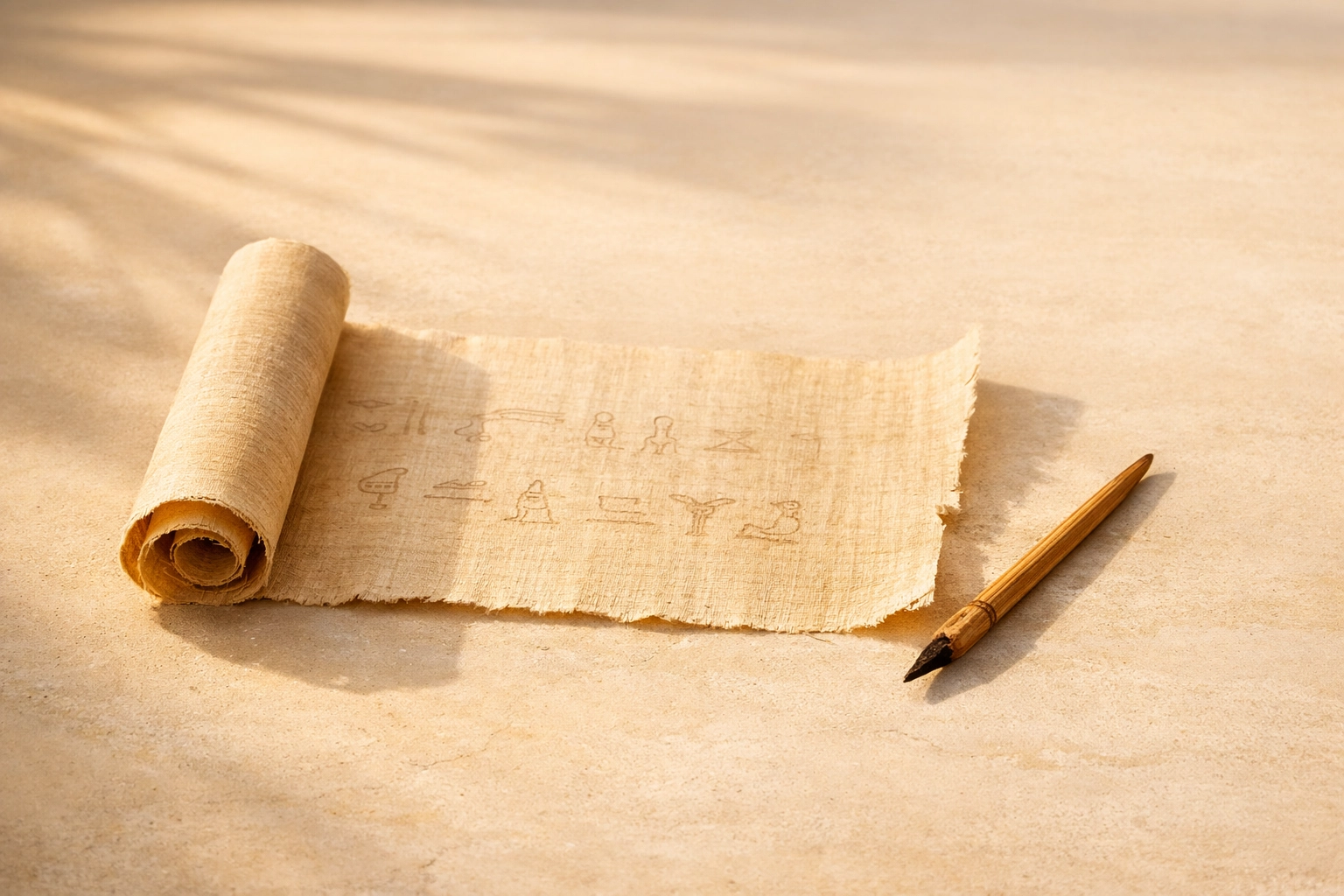
While Mesopotamia was developing its clay tablet system, ancient Egypt was creating its own version of notarial services. Egyptian scribes held positions of enormous prestige and power.
In Egypt, scribes were trained in special schools and were among the few literate members of society. They recorded everything from tax collections to royal decrees, from property transfers to court proceedings. They used papyrus (much lighter than clay tablets!) and hieroglyphic or hieratic script.
Like their Mesopotamian counterparts, Egyptian scribes authenticated documents and served as official witnesses. They were essential to the functioning of the state, the temples, and the economy.
The Egyptian system was so sophisticated that they had different types of scribes for different purposes, royal scribes, temple scribes, military scribes, and scribes who specialized in legal documents. Specialization in the notary field isn't new either!
Rome: Where "Notarius" Was Born
Fast forward a couple thousand years to ancient Rome (we're talking around 500 BC to 500 AD), and we get closer to the modern notary as we know it.
The Romans called them notarii, literally "note-takers" or "shorthand writers." Originally, these were scribes who used a system of shorthand (called "nota") to quickly record speeches, court proceedings, and official business.
Over time, the role evolved. Roman notarii began:
Recording contracts and agreements
Creating certified copies of documents
Authenticating signatures
Witnessing transactions
Maintaining archives of important documents
The Roman legal system was incredibly advanced, and notaries played a crucial role in it. They helped ensure that legal transactions were properly documented and authenticated, reducing fraud and disputes.
Sound like anyone you know? (Hint: it's me!)
What Ancient Notaries Teach Us
Looking at these ancient systems, a few things become crystal clear:
Trust has always been the foundation. Whether in ancient Sumer or modern Alaska, notaries exist because communities need a trusted, neutral third party to authenticate important documents.
The technology changes, but the purpose doesn't. Clay tablets became papyrus, which became parchment, which became paper, which is now becoming digital, but we're still doing the same job: preventing fraud and ensuring authenticity.
Official authorization matters. For 5,000 years, societies have recognized that notaries need to be officially appointed and held to standards. That's why I had to go through the commissioning process with the State of Alaska.
Accessibility has always been important. Ancient scribes positioned themselves in marketplaces and city gates, places where people naturally gathered. Today, I come to you at Fort Greely, Delta Junction, or wherever you need me. Same principle, different era.
Coming Up Next...
We've traced the notary profession from ancient clay tablets to Roman shorthand, but we're just getting started. In Part 2, we'll explore how notaries evolved through the Middle Ages, survived the fall of Rome, spread across Europe, and eventually made their way to the New World with early American colonists.
Spoiler: there are some wild stories involving kings, explorers, and the American frontier!
Stay tuned for the next installment of "From Clay Tablets to Smartphones!"
Disclaimer: I am not an attorney licensed to practice law and may not give legal advice or accept fees for legal advice. Arctic Trekking, LLC does not provide legal advice. For legal questions, please consult a licensed attorney. Military IDs cannot be copied by law.
Powered by Marblism.
Comments