
Document Deep Dive Part 2: Real Estate & Deeds – Navigating Home and Land Transfers
Welcome back to the Document Deep Dive series! In Part 1, we talked about Powers of Attorney and why they're so important. Today, we're tackling something that affects almost every homeowner or land buyer at some point: real estate deeds.
If you've ever bought a house, inherited property, or transferred land to a family member in Alaska, you've dealt with a deed, even if you didn't fully understand what it was. And honestly? Most people don't. Deeds sound official and complicated, but they're really just the legal way of saying, "This property now belongs to you instead of me."
Let's break down the two most common types, Quitclaim Deeds and Warranty Deeds, and how mobile notaries like us help make sure everything's done right, especially out here in the Interior.
What Exactly Is a Deed?
Before we dive into the types, let's start with the basics.
A deed is the legal document that transfers ownership of real estate from one person (or entity) to another. It's not the same thing as a title, your title is your legal right to the property, while the deed is the piece of paper that makes the transfer official.
Think of it this way: the deed is the vehicle that moves ownership from Point A to Point B. Once it's signed, notarized, and recorded with the state, the ownership change becomes public record.
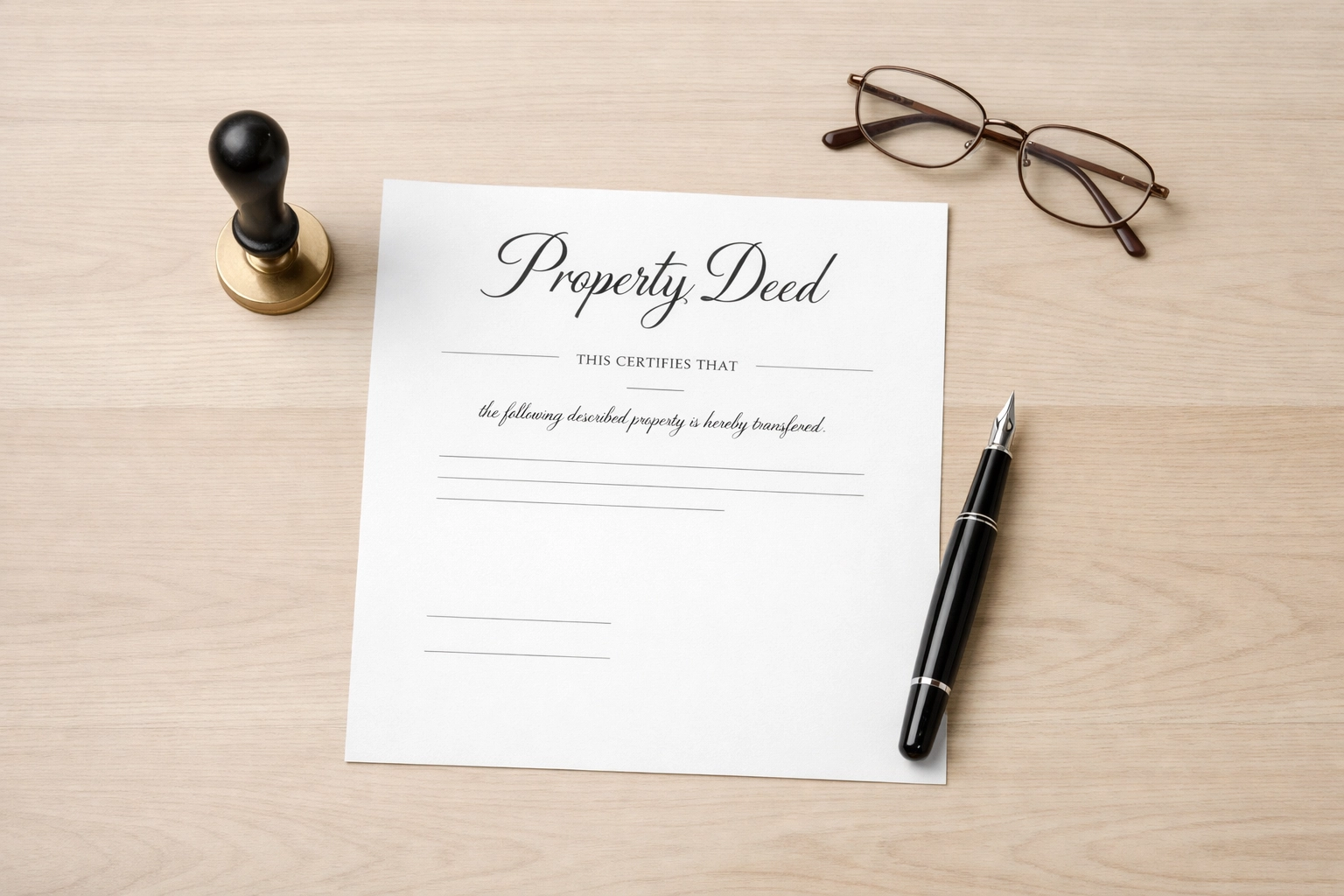
In Alaska, deeds get filed with the Alaska Recorder's Office in your district. Until that deed is recorded, the new owner isn't fully protected. That's why notarization and proper filing are so critical.
Quitclaim Deeds: The "As-Is" Transfer
A Quitclaim Deed is the simplest type of property transfer. It's basically the seller saying, "I'm handing over whatever interest I have in this property, if any, but I'm not making any promises about it."
When Do People Use Quitclaim Deeds?
Quitclaim deeds are common in situations where:
You're transferring property to a family member (like adding a spouse to the title or gifting land to your kids).
You're moving property into or out of a trust.
You're clearing up a title issue (for example, removing an ex-spouse's name after a divorce).
You're dealing with inherited property where the title might be murky.
The Big Catch
Here's the thing: a Quitclaim Deed offers zero guarantees. The person signing it isn't saying the property is free and clear of liens, debts, or other claims. They're just saying, "Here's what I've got, take it or leave it."
That makes Quitclaim Deeds great for transfers between people who trust each other (like family), but not ideal for buying property from a stranger. You'd want more protection in that case.
Warranty Deeds: The "Full Guarantee" Option
A Warranty Deed is the opposite. It's the gold standard of property transfers because the seller is making a legal promise: "I own this property free and clear, and if there are any hidden problems with the title, I'm responsible."
When Do People Use Warranty Deeds?
Warranty deeds are the go-to for:
Traditional home sales (when you're buying from someone you don't know).
Refinancing a mortgage (lenders usually require a Warranty Deed to protect their investment).
Commercial real estate transactions where buyers need assurance the property is clean.
Why It Matters
With a Warranty Deed, the seller is legally backing up the title. If someone comes out of the woodwork later claiming they have a lien on the property, the seller is on the hook, not you. That peace of mind is why most buyers insist on a Warranty Deed during a standard home purchase.
So Which One Do You Need?
It depends on the situation:
Scenario | Best Deed Type |
Buying a home from a stranger | Warranty Deed |
Adding your spouse to the title | Quitclaim Deed |
Transferring property into a trust | Quitclaim Deed |
Inheriting land from a family member | Quitclaim Deed |
Selling your house | Warranty Deed |
Refinancing with a lender | Warranty Deed |
Not sure? That's what title companies and real estate attorneys are for. But once you know which deed you need, that's where we come in.

How Mobile Notaries Help with Deeds in Alaska
Here's the thing about deeds: they're not valid until they're signed, notarized, and recorded. Miss one of those steps, and the transfer doesn't count.
That's where Arctic Trekking comes in. We notarize real estate deeds all the time, whether you're closing on a cabin in Delta Junction, transferring land near Fort Greely, or refinancing your home in the middle of February at -30°F.
Here's What We Do:
✅ Verify your identity using a valid government-issued ID (like a driver's license or passport). ✅ Witness your signature on the deed to make it legally binding. ✅ Apply our official notary seal and signature, which is required before the deed can be recorded. ✅ Come to you, whether that's your kitchen table, a title company office, or a remote property site.
Why Mobile Notaries Matter in Alaska
Let's be honest: Interior Alaska isn't exactly crawling with notaries on every corner. If you're in Tok, Big Delta, or Fort Greely, you might be hours away from the nearest notary office. And if you're closing on a Friday afternoon or need something notarized after business hours? Good luck.
That's why mobile notary service is a game-changer out here. We come to you, on your schedule, even if that means meeting at 7 PM on a Wednesday or driving out to a property in the middle of nowhere.
Plus, we handle Remote Online Notarization (RON) for clients who prefer to sign digitally. If you're out of state but buying Alaska land, or if you're refinancing and want to skip the in-person meeting, RON makes it possible.
A Word About Recording
Getting the deed notarized is only half the battle. Once it's signed and sealed, it needs to be recorded with the Alaska Recorder's Office in your district. Until that happens, the ownership change isn't official.
We don't file deeds on your behalf (that's usually handled by your title company, attorney, or real estate agent), but we make sure the notarization is done correctly so there are no hiccups when it's time to record.
Final Thoughts
Real estate transactions can feel overwhelming, especially when you're dealing with legal documents, notary requirements, and tight deadlines. But understanding the difference between a Quitclaim Deed and a Warranty Deed is half the battle.
Whether you're buying your first home, transferring property to a loved one, or refinancing to lock in a better rate, Arctic Trekking is here to help. We'll make sure your deed is notarized properly, on time, and without the hassle of driving hours to find a notary.
Need a mobile notary for a real estate deed? Reach out to us, we're standing by.
Disclaimer: I am not an attorney licensed to practice law and may not give legal advice or accept fees for legal advice. The information provided in this blog post is for general informational purposes only and should not be construed as legal counsel. For specific legal questions regarding real estate transactions, please consult a qualified attorney.
Military ID Notice: By law, a military ID cannot be copied for any reason. If you're using a military ID for notarization, we will verify it visually but will not photocopy or scan it.
Powered by Marblism
Comments