
1099-What? A Plain English Guide to the Confusing Tax Forms Clogging Your Mailbox
Part 5 of our Tax Season Survival Series
Let's be real: you open your mailbox in February, and suddenly there's a parade of official-looking envelopes with mysterious numbers and letters. 1099-NEC. 1099-MISC. 1099-something-or-other. Your first thought? "What fresh tax hell is this?"
Don't worry, you're not alone. These forms look intimidating, but they're actually just the IRS's way of keeping tabs on money you earned outside of your regular paycheck. Think of them as financial receipts that other people send to both you and Uncle Sam.
Today, we're breaking down the 1099 family tree in plain English, with special attention to situations you might face living in remote Alaska or serving in the military. Plus, we'll talk about when these forms might require a notary's help (spoiler: it's not the form itself, but sometimes the paperwork that goes with it).
What Even IS a 1099 Form?
Here's the deal: a 1099 is a tax document that reports income you received from someone who isn't your traditional employer. While your job sends you a W-2 for your wages, everyone else who paid you more than a certain amount (usually $600) has to send you a 1099.
Why do they exist? Because the IRS wants to make sure all income gets reported. When someone pays you, they're basically tattling to the government: "Hey, we gave this person money!" That way, you can't conveniently "forget" about that freelance gig or rental income when April rolls around.
The good news? You're not being singled out. Anyone who makes money outside a traditional paycheck gets these. Freelancers, landlords, retirees, gig workers, investors, we're all in this boat together.
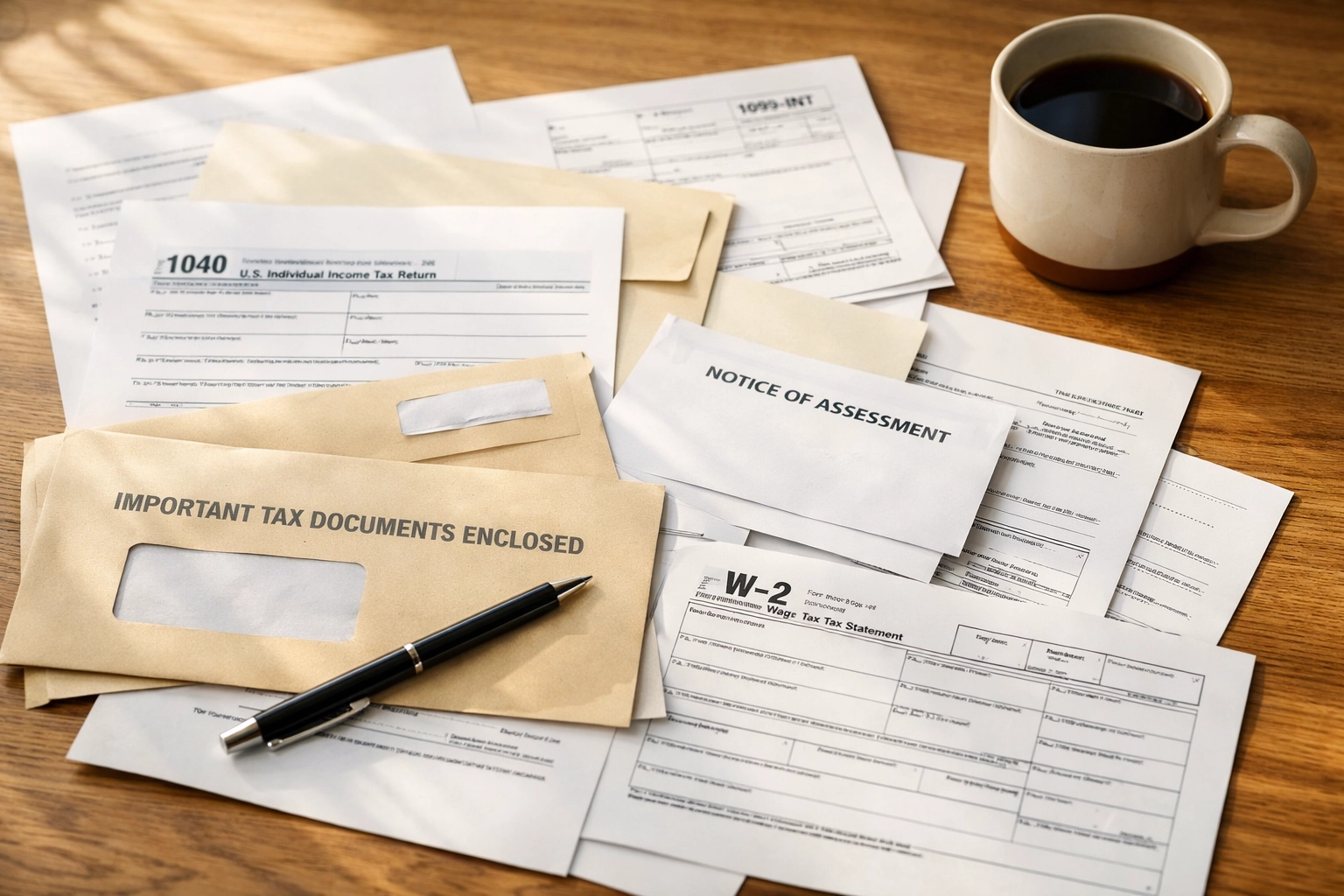
The Common Players: Your 1099 Lineup
There are actually 22 different types of 1099 forms floating around the tax universe, but most people only see a handful. Let's break down the ones you're most likely to encounter:
1099-NEC: The Freelancer's Friend (or Foe)
What it reports: Nonemployee compensation, basically, money you earned as an independent contractor or freelancer.
The threshold: $600 or more.
Alaska connection: If you do seasonal work, guide tourists in the summer, or help with construction projects as a contractor (not an employee), you'll get one of these. Same goes for military spouses who freelance while their partner is stationed up here.
1099-MISC: The Kitchen Sink Form
What it reports: Miscellaneous income like rent payments, royalties, prizes, awards, and certain medical payments.
The threshold: Usually $600, but that's jumping to $2,000 for tax year 2026.
Alaska connection: If you rent out your cabin or property, your tenant should send you one of these. Also applies to subsistence payments or certain Native corporation distributions that don't fit elsewhere.
1099-INT: Interest Earned
What it reports: Interest income from your bank accounts, credit unions, or other financial institutions.
The threshold: $10 or more.
Why you care: Even that measly $15 in interest from your savings account counts as taxable income. Credit unions up here are good about sending these out, just don't lose it.
1099-DIV: Dividend Income
What it reports: Dividends from stocks, mutual funds, or other investments.
Military connection: If you've got a TSP (Thrift Savings Plan) or other investment accounts, you might see this form depending on how your account generates income.
1099-R: Retirement and Pension Distributions
What it reports: Money you took out of retirement accounts, pensions, IRAs, or annuities.
The threshold: Any amount over $10.
Alaska/Military connection: Military retirees receiving pension payments will see this every year. Same for anyone tapping into their Alaska retirement accounts.
1099-G: Government Payments
What it reports: Unemployment benefits, state tax refunds, agricultural payments, and other government assistance.
Alaska connection: If you received your PFD (Permanent Fund Dividend) and then some, or if you collected unemployment during the off-season, this form tracks it. Military folks who received certain state benefits will also see this.
1099-S: Real Estate Sales
What it reports: Proceeds from selling real property.
Alaska connection: Sold your home or land? The closing agent typically issues this form. Important for military families who sell when they PCS out of Alaska.
1099-K: Payment Card Transactions
What it reports: Income from payment apps like Venmo, PayPal, Cash App, or credit card processors.
The reality: The rules keep changing here, but basically if you're running a side business and getting paid through these platforms, expect this form.

Wait, Do I Need a Notary for My 1099s?
Here's the short answer: No, the 1099 forms themselves don't need notarization. You just report the income on your tax return.
BUT: and this is important: sometimes the situations that generate 1099 income require notarized documents. Here's where things get interesting:
Tax-Related Documents That Might Need a Notary
Power of Attorney (IRS Form 2848): If you're military and deployed, you might need to give someone power of attorney to handle your taxes. While the IRS doesn't require notarization for Form 2848, many people choose to notarize it anyway for extra security: especially if that POA will be handling financial matters beyond just taxes.
Affidavits for Income Verification: Sometimes lenders, government agencies, or legal proceedings require you to swear under oath about your income. If you're self-employed (hello, 1099-NEC recipients), you might need a notarized affidavit stating your income when applying for loans or benefits.
Estate and Trust Documents: If your 1099-R relates to an inherited retirement account, or you're dealing with trust distributions, the underlying estate paperwork often requires notarization.
Real Estate Documents: That 1099-S from selling property? The actual sale documents (deeds, closing statements) almost certainly needed a notary. If you're remote and selling land or a home, mobile notary services make this process infinitely easier.
Military Special Circumstances: Certain tax extensions or filing adjustments for combat zone service might require supporting documentation that needs notarization.
The Remote Alaska Reality
Living in places like Delta Junction, Fort Greely, or anywhere off the road system adds a fun twist to tax season. Your mail might arrive in batches, you might not get forms until late February, and good luck finding a notary when you need one at the last minute.
Pro tips for remote Alaskans:
Track your own income: Don't wait for 1099s to show up. Keep records of who paid you and when.
Digital copies are your friend: Scan everything immediately. Winter mail has a way of disappearing or getting delayed.
Know your notary options: If you think you'll need documents notarized for tax purposes, line that up early. Mobile notaries can come to you, even in remote locations.
The Bottom Line
1099 forms aren't the enemy: they're just paperwork. Each one tells the story of income you earned throughout the year. Add them all up, report them on your tax return, and you're good to go.
The key is staying organized. Create a tax folder (physical or digital), and every time a 1099 shows up, stick it in there. When April rolls around, you'll have everything in one place instead of frantically searching through junk mail drawers.
And if you need help with any tax-related documents that do require notarization? That's where Arctic Trekking comes in. I'll come to you: whether you're in town or out on a homestead: and make sure your paperwork is properly witnessed and sealed.
Tax season doesn't have to be scary. It's just organized chaos, and now you've got one less thing to be confused about.
Disclaimer: I am not an attorney licensed to practice law and may not give legal advice or accept fees for legal advice. This blog post provides general information about tax forms and notary services but does not constitute tax or legal advice. For specific tax questions, consult a qualified tax professional or CPA.
Powered by Marblism
Comments